See
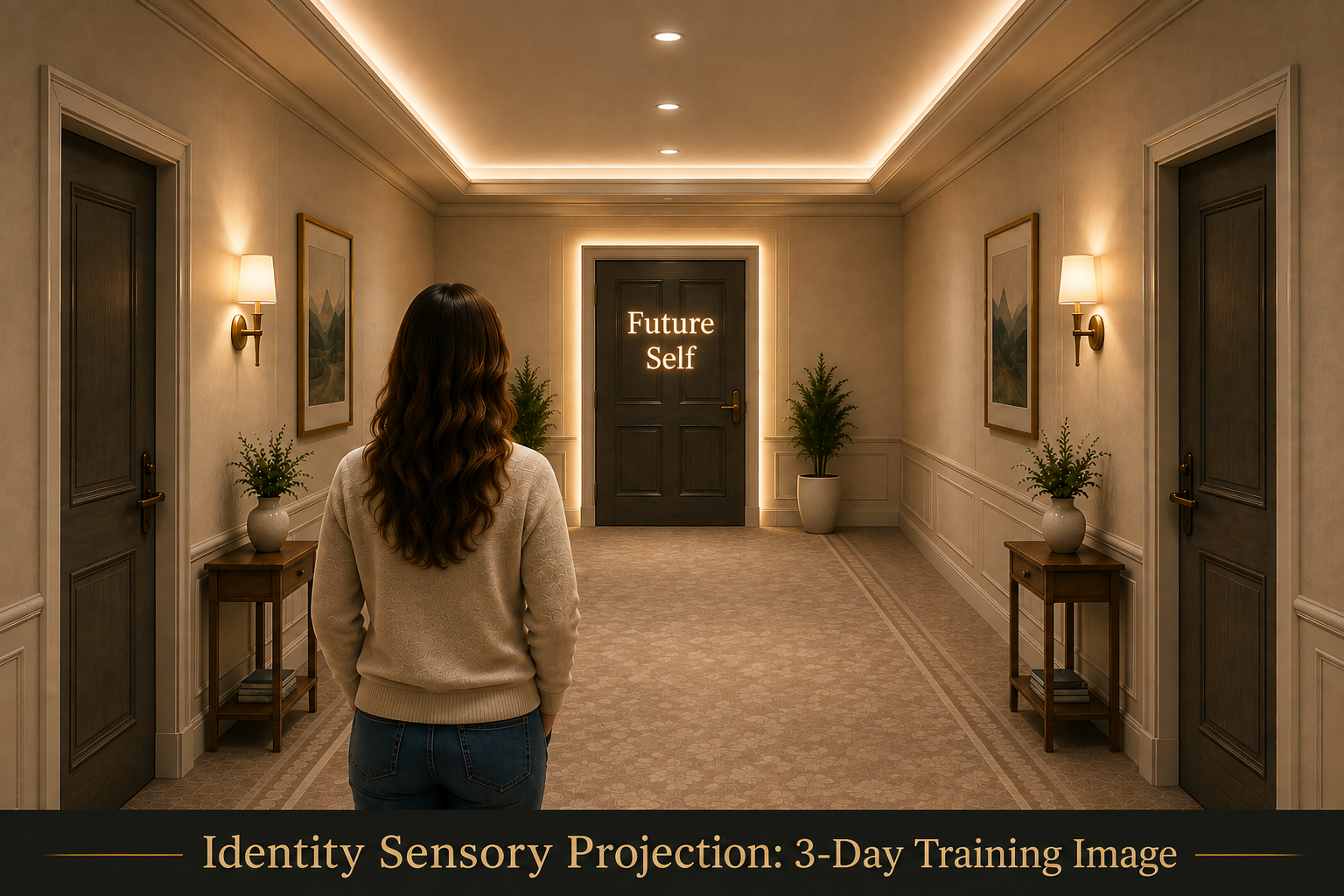
Enter a simple hallway and locate the door 72 hours away.
Identity Sensory Projection™
The 72-hour orientation is a short, grounded practice for constructing a plausible future self, listening for useful perspective, and bringing one clear action back to today.
 Download Free Workbook
Purpose
Identity Sensory Projection does not ask you to predict the future or pretend an imagined identity is already factual. It gives you a structured way to construct a plausible person, notice what that perspective makes easier to see, and test the insight through real behavior.
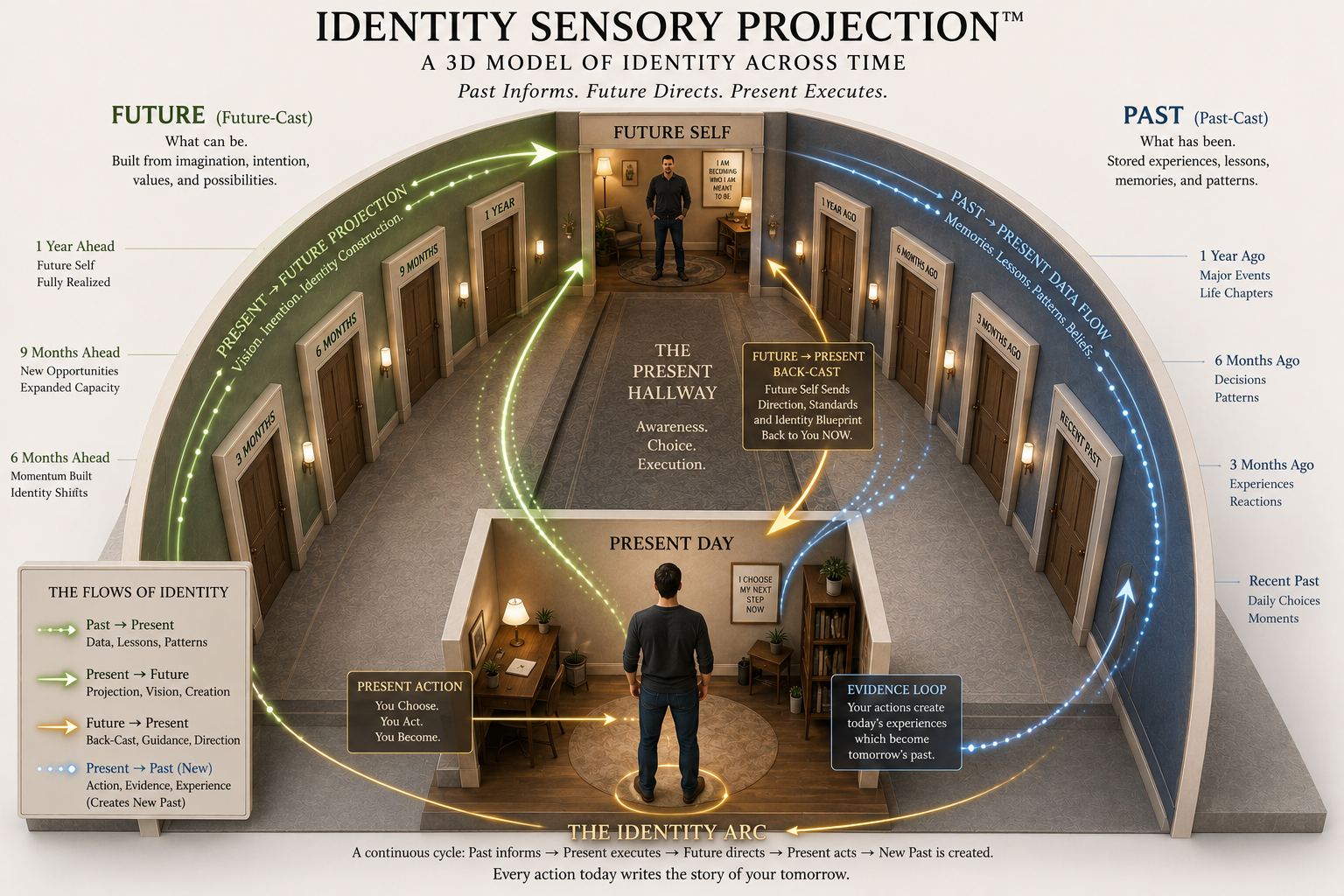
Past informs. Future directs. Present executes.
The orientation at a glance
The exercise moves forward into a constructed future identity, then returns with something specific enough to test.
Enter a simple hallway and locate the door 72 hours away.
Build the future person through detail, feeling, posture, voice, and place.
Recognize continuity with this person without requiring perfection.
Pair the perspective with a phrase, gesture, place, or daily cue.
Choose one behavior and create evidence in the present.
The core image
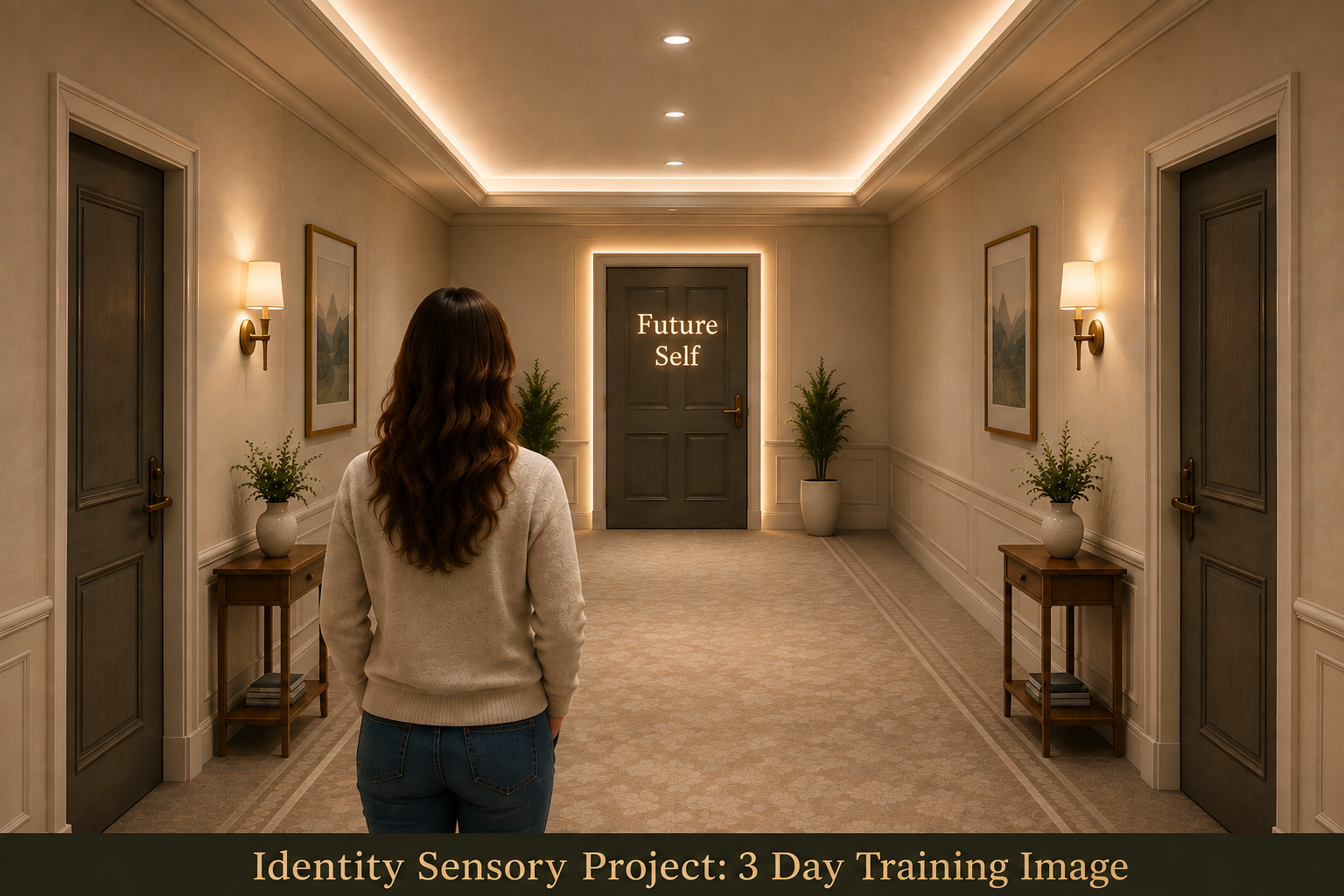
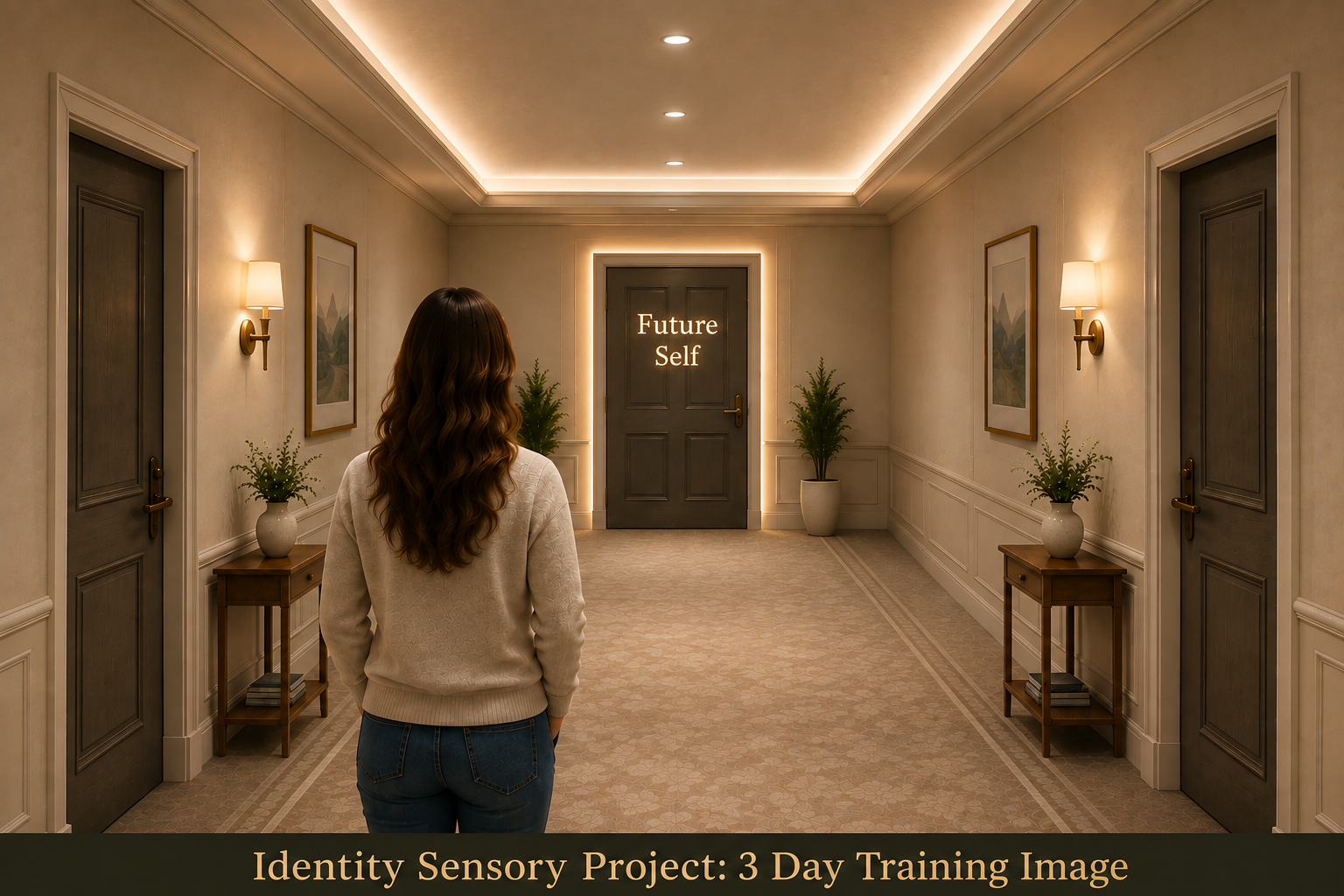
Imagine standing in a hallway. Doors on the right represent the past: experiences, lessons, patterns, relationships, and decisions that already contribute to your working identity. Doors on the left represent possible future experiences. At the far end is one door marked FUTURE SELF — exactly 72 hours away.
Full guided procedure
Set aside roughly 10–30 minutes. Read the sequence once before beginning. You do not need a cinema-quality image; posture, words, bodily sensation, emotional tone, or conceptual knowing all count as contact.
Arrive at stillness. Name one real question or situation you are exploring over the next three days.
Notice the present-day room behind you. Let past doors and future possibilities exist without needing to open them.
Take imagined steps toward the Future Self door. Let the distance remain short, believable, and close enough to recognize.
Open the door. It is 72 hours later. Notice the room, the light, the time of day, and what this person is doing on an ordinary day.
Move through visual, kinesthetic, emotional, auditory, environmental, relational, and behavioral detail. Stay with what feels constructive.
Notice how Future Self stands, speaks, breathes, and responds. If it feels comfortable, imagine a caring greeting or embrace.
Notice the future identity through sight, sound, touch and feeling, smell, and taste. Let whichever sensory details arise naturally make the experience vivid and embodied.
Ask your question, then become quiet for 60–90 seconds. Receive an image, word, concern, memory, behavior, or nothing at all.
Bring the perspective back to what is within your control. Test each idea against your values, reality, and available choices.
Turn the useful part into an implementation intention with a cue and an action.
Thank Future Self. Step backward, leave the room, close the door, and return to the hallway.
Take five deliberate imagined steps toward the present. Feel the surface beneath you, notice the room, and open your eyes when ready.
The exercise is not complete when your eyes open. Present behavior is what turns imagination into information.
Evidence log
Choose one anchor while the future identity is still vivid: a specific object or location, a phrase in that person’s voice, a posture or gesture, or a recurring daily moment. Then complete the behavior you selected.
Return to your notes after three days. Do not ask whether Future Self was psychic. Ask what you anticipated, what you missed, what you learned, what you actually did, and what the experience now teaches you.
Use these prompts to turn an imagined perspective into tested information.
Progression
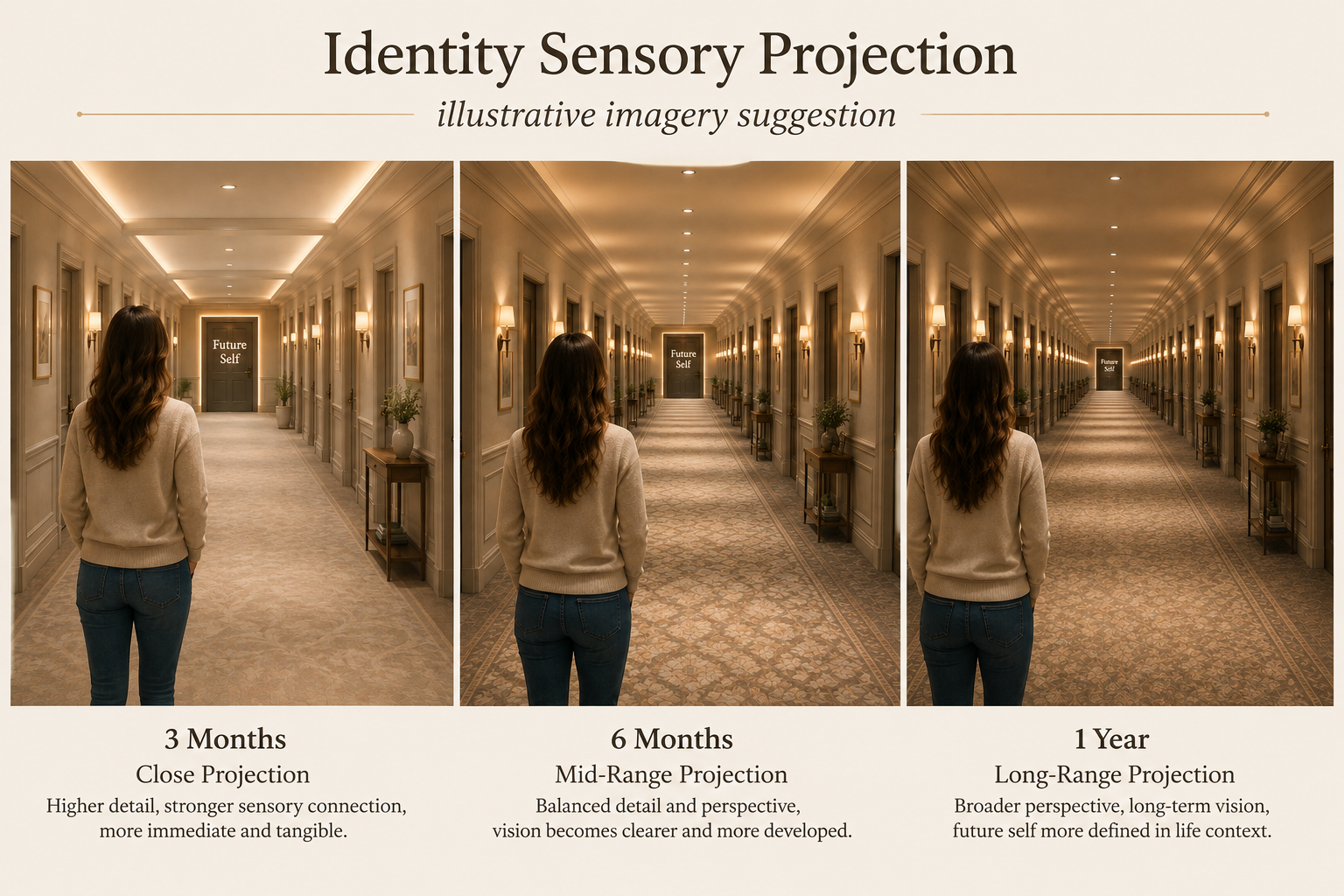
Once the 72-hour practice feels familiar, the hallway can extend to three months, six months, or a year. The question stays the same: can I still recognize this person as me, and can I bring something actionable back to today?
Guardrails
Future imagery is simulation, not foreknowledge. It should never be the sole basis for a major financial, medical, legal, safety, relationship, or employment decision. Ask what possibility the exercise helped you notice, then gather the real-world information you need before acting.
Troubleshooting
The exercise does not need to be vivid or certain to be useful. Treat what arises as information to examine, not an instruction you must obey.
Do not force a cinematic image. Let posture, words, bodily sensation, emotional tone, or a conceptual sense of the person count as contact. You can also shorten the horizon until the person feels believable.
Expect that possibility. A projection may contain insight, expectation, fear, or plain imagination. Test it against your values, available facts, and actual outcomes rather than treating it as foreknowledge.
The loop
The imagined future self can suggest. The present self must test, choose, and act. The outcome becomes evidence — and only then does imagined experience become lived history.