How to Read the Evidence
The introduction distinguishes the standards of evidence used in philosophy, psychology, neuroscience, and theology.
Resources Books The Architecture of Identity
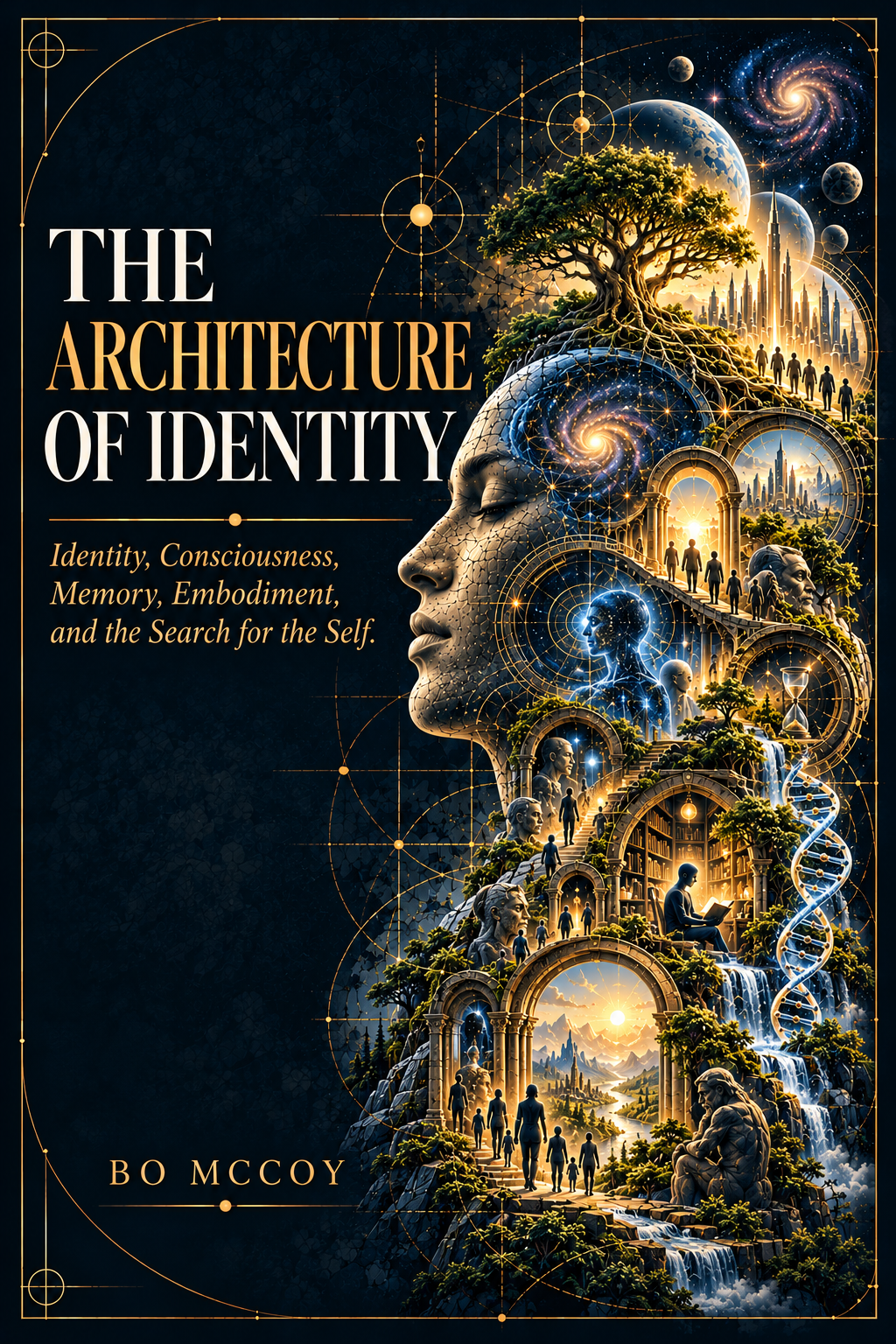
Digital book · Manifested Identity
Across eleven chapters, Bo McCoy explores identity through philosophy, psychology, neuroscience, social relationships, and spiritual questions. The book examines how memory, narrative, embodiment, and relationships shape the self; why identity can become unsettled during change; and what it means to become someone new. It distinguishes research findings from philosophical and theological interpretations rather than claiming that science settles every question about the self.
Find your starting point
A closer look inside
Selected chapters and themes show how the book develops its ideas, from understanding the problem to putting the work into practice.
The opening chapters examine the question of identity and the construction of the self.
Chapters 3–5 explore memory and narrative, the body, and the influence of other people on who we understand ourselves to be.
Identity across time leads into disruption, transition, loss, reinvention, behavior, and resistance to becoming who we want to be.
The later chapters consider identity, soul, God, transcendence, and an integrated account of who we are.
The final chapter considers our evolving presence, future identity creation, and what humanity may become, followed by an epilogue and glossary.
From reading to practice
The book supports its inquiry with guidance on interpreting evidence and a glossary of core terms.
The introduction distinguishes the standards of evidence used in philosophy, psychology, neuroscience, and theology.
The introduction explains how several disciplines approach identity and why no single discipline owns the question.
A reference section at the end of the book brings together its core terminology.
Know someone who needs this?
Sharing sends people to this page, with the cover, the overview, and where to get the book.