Key Terms and the Five Estates
A concise opening guide defines the model's vocabulary, including the Five Estates, Sentient Receiver, Parallel Consciousness Observer, and Idemic Consciousness.
Resources Books The Theory of “I”
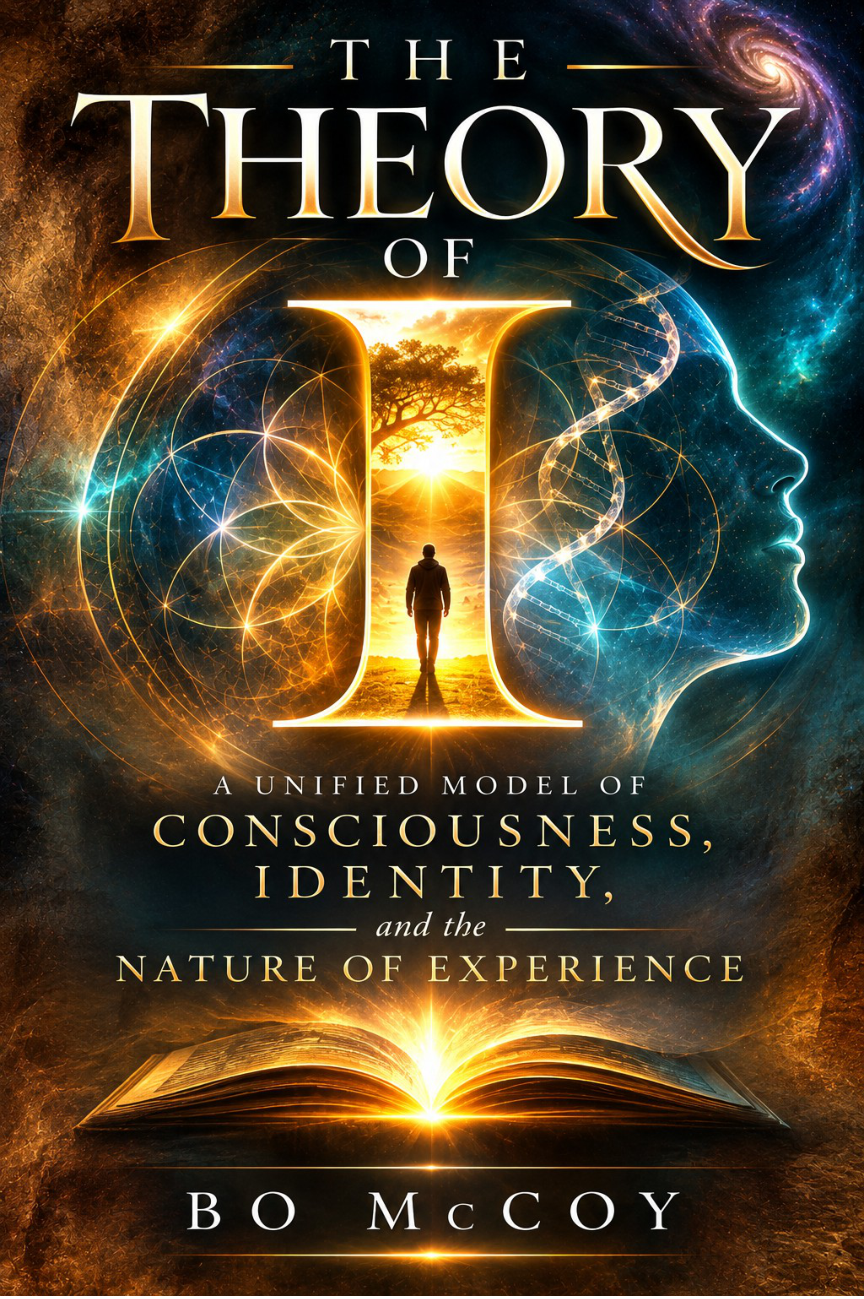
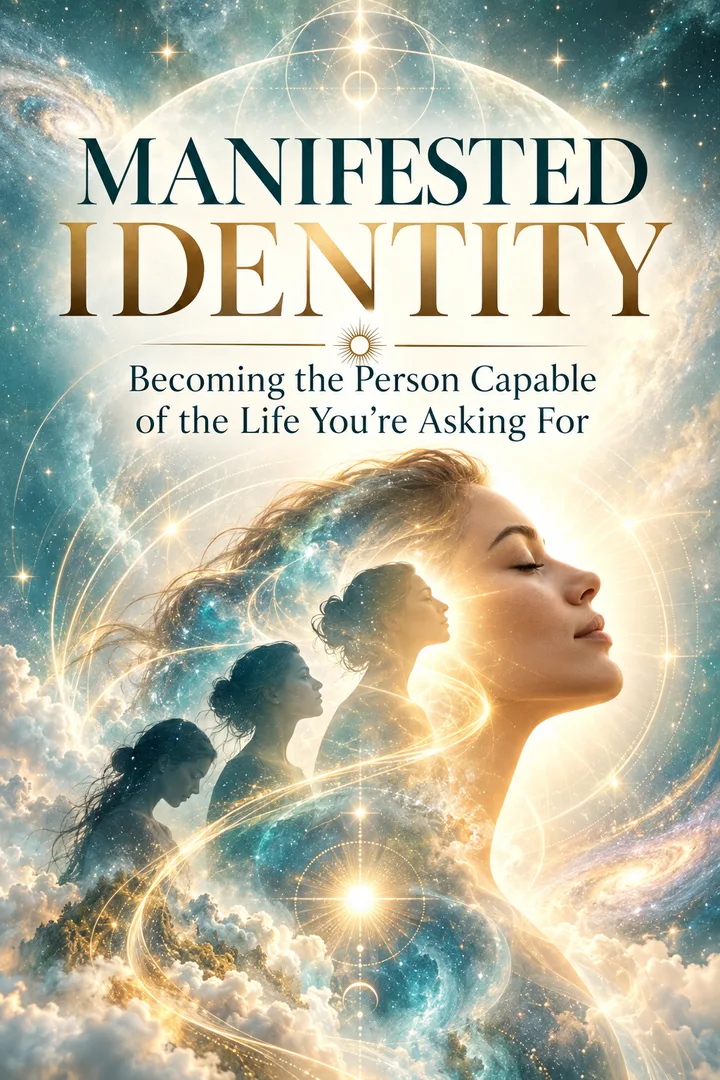
Digital book · Manifested Identity
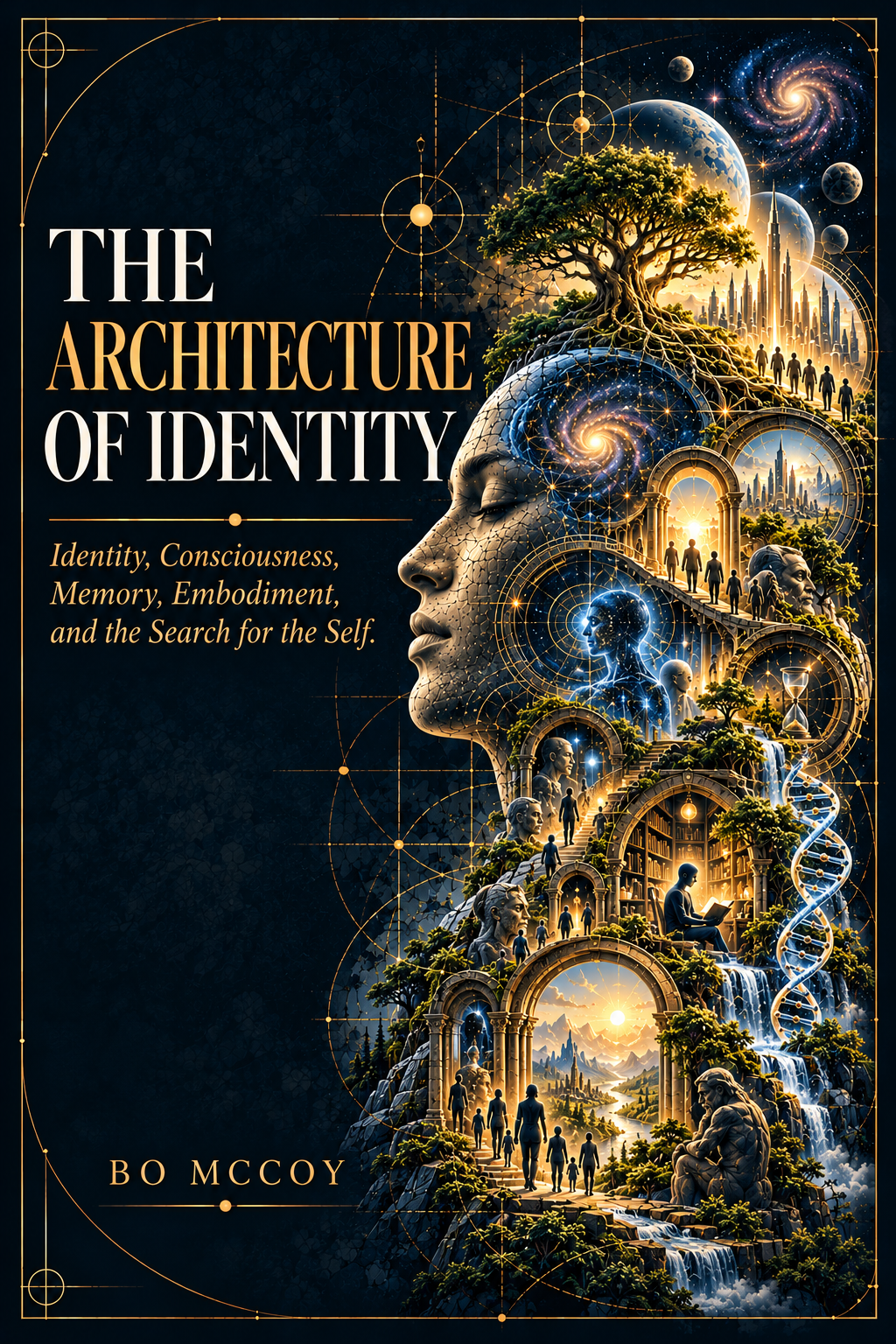
What does it mean to be the one experiencing a life? Across fifteen chapters, Bo McCoy develops a unified model of consciousness, identity, and the nature of experience. The book introduces the Five Estates, examines the relationship between lived experience and the observing self, and follows identity through Past, Present, and Projection into the practice of becoming. Its philosophical and metaphysical proposals are presented as a theory, not as established scientific facts.
Find your starting point
A closer look inside
Selected chapters and themes show how the book develops its ideas, from understanding the problem to putting the work into practice.
Begin by separating consciousness, self, identity, and personhood, then meet the five-domain architecture through which the book understands first-person experience.
Chapters on the Manifested Estate, Embodied / Experiential Estate, and Conscious Script Layer explore action, lived bodily experience, beliefs, expectations, and narrative meaning.
Explore the Gateway / Guardrail Estate, the Continuum, and the relationship between the Sentient Receiver and the Parallel Consciousness Observer within the author's theory.
Consider why established patterns repeat, how resistance to identity change can arise, and what deliberate identity reorientation involves.
The later theoretical chapters develop the Gateway and the proposed connection between embodied and fundamental consciousness. These are elements of the book's model, not claims of settled scientific mechanisms.
The final three chapters bring the model toward the Integrated “I,” the Practice of Becoming, and the Continuity of “I.” Notes and a bibliography follow the fifteen chapters.
From reading to practice
A key-terms guide, practical identity concepts, notes, and a bibliography help readers follow the theory and reflect on its application.
A concise opening guide defines the model's vocabulary, including the Five Estates, Sentient Receiver, Parallel Consciousness Observer, and Idemic Consciousness.
Past, Present, and Projection organize identity in time. The 72-Hour Gate names the practice of translating recognition into action while it is still fresh.
Endnotes and a bibliography provide references for further reading and help readers distinguish cited scholarship from the author's proposed framework.
Know someone who needs this?
Sharing sends people to this page, with the cover, the overview, and where to get the book.